As the days get longer and the temperature starts creeping up, most of us begin thinking about how to keep our homes comfortable without watching the energy bill spiral out of control. Air conditioning is one option — but if you're looking for something more energy-efficient, stylish, and genuinely practical year-round, a ceiling fan could be exactly what you need.
At Alert Electrical, we stock a great range of ceiling fans to suit all kinds of spaces and budgets. Whether you're kitting out a bedroom, a living room, or even a kitchen, there's a ceiling fan that'll do the job beautifully.
So, in this article, we explain everything you need to know when it comes to choosing the right option for you.
Why Choose a Ceiling Fan?
Ceiling fans have come a long way from the chunky, noisy units of decades past. Today's models are sleek, quiet, and often packed with smart features. Here's why so many homeowners in the UK are choosing them:
They're incredibly energy-efficient. Running a ceiling fan typically costs just a few pence per hour, compared to significantly more for air conditioning. For a long, warm summer, that difference really adds up.
They work in winter too. Most ceiling fans have a reversible motor. In summer, the blades spin anticlockwise to push cool air downwards. In winter, you reverse the direction to draw cool air up and push the warm air that rises to the ceiling back down into the room. It's a genuinely useful feature that many people don't realise they have.
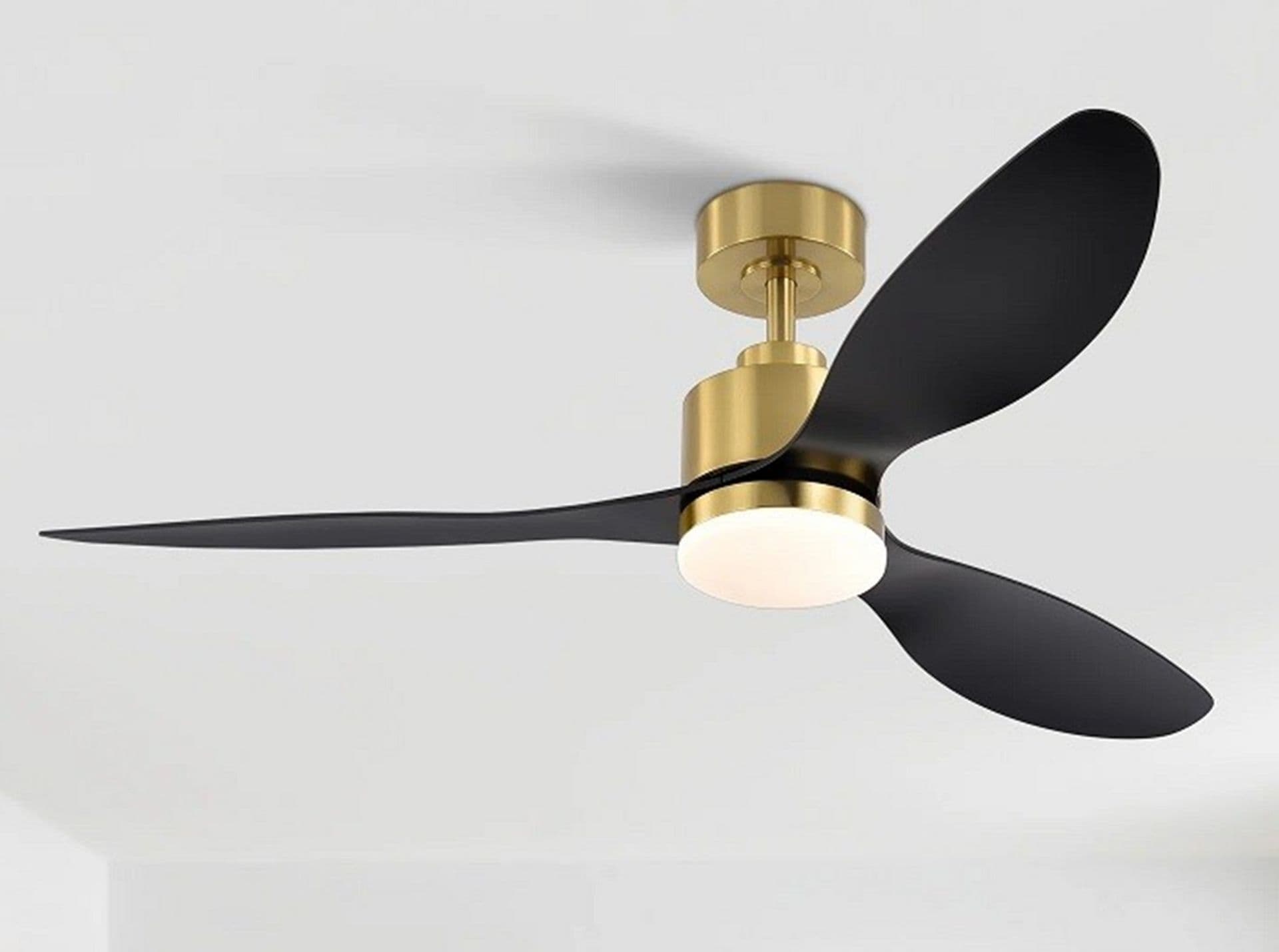
They look great. Modern ceiling fans are a real design statement. From brushed chrome and matte black to natural wood finishes and contemporary minimalist styles, there's a fan to complement almost any interior.
They can include lighting. Plenty of ceiling fans come with integrated light kits, which means you're adding both a fan and a light fitting in one installation — ideal if you're working with limited ceiling space or want to reduce the number of separate fixtures.
At Alert Electrical, we are pleased to offer a wide range of Westinghouse Ceiling Fans, including the very popular Westinghouse Industrial Expresso 56”.
What Size Ceiling Fan Do I Need?
Getting the right size fan for your room makes a real difference to how effective it is. Here's a simple guide:
- Small rooms (up to about 10m²) — look for a fan with a blade span of around 90–100cm. Think box rooms, home offices, or compact bedrooms.
- Medium rooms (10–20m²) — a blade span of 100–130cm tends to work well. Most standard living rooms and double bedrooms fall into this range.
- Large rooms (20m² and above) — you'll want a blade span of 130cm or more, or consider installing two smaller fans rather than one large one.
It's also worth thinking about ceiling height. For safety and best performance, ceiling fan blades should ideally be at least 2.3 metres above the floor — which works well with the standard UK ceiling height of around 2.4 metres. If you have lower ceilings, look for a flush-mount (also called a hugging) model, which sits close to the ceiling without a downrod and helps you meet that clearance.
For rooms with particularly high ceilings, an extended downrod will help bring the fan closer to the living space where you'll actually feel the benefit.
Ceiling Fan Features Worth Looking Out For
Not all ceiling fans are the same, and a few features are really worth considering before you buy.
Remote control and smart compatibility. Being able to adjust speed and lighting from the sofa — or from your phone — is a genuine quality-of-life improvement. Many newer models are compatible with smart home systems, which means you can even set schedules or integrate your fan with voice assistants.
DC motors vs AC motors. DC motor fans are more energy-efficient than traditional AC motor fans and tend to run more quietly too. They're generally a bit more expensive upfront, but the running cost savings can make them well worth it over time.
Number of speed settings. Most ceiling fans offer at least three speed settings, but higher-end models may give you six or more. More settings means finer control over the airflow and noise level, which is particularly useful in a bedroom.
Reversible motor. As mentioned above, this is a really useful feature that lets you use the fan year-round. It's worth checking before you buy.
Blade material. Wooden or wooden-effect blades tend to look more premium and work well in traditional or warm-toned interiors. Metal or ABS plastic blades often suit more contemporary spaces. If you're installing a fan in a bathroom or a conservatory, make sure you choose a model with a suitable IP rating for humid environments.
Ceiling Fans with Lights — Getting Two Jobs Done at Once
If your room currently has a central pendant light, replacing it with a ceiling fan and light combination is a smart move. You'll free up ceiling space, reduce the number of fittings you need, and often end up with better-quality lighting as a bonus.
Many of the ceiling fan and light combinations available at Alert Electrical feature LED light kits, which are long-lasting and low-energy — so the efficiency benefits extend to your lighting as well.
When you're shopping for a fan-light combo, check the lumen output of the integrated light to make sure it'll be bright enough for the room. A bedroom might be fine with a softer, lower-output light, but a kitchen or home office will generally need something brighter.
Can I Install a Ceiling Fan Myself?
Ceiling fans connect to your home's mains wiring, so it's important the installation is done correctly and safely. If you're replacing an existing ceiling light fitting on an existing circuit, this is generally considered non-notifiable work under Part P of the Building Regulations — but all electrical work must still meet BS 7671 standards, and getting a registered electrician to do the job is always the recommended route. If a new circuit is needed, a registered electrician is a legal requirement. Either way, a professional will ensure everything is properly certified and that the fan is securely mounted to a suitable ceiling mount or electrical box — which matters more than you might think given the weight and movement involved.
That said, the installation process is fairly quick and straightforward for a competent electrician, so it shouldn't take up too much of their time or your budget. If you're having any other electrical work done at the same time, it's often a good opportunity to get a ceiling fan fitted too.
Where Can Ceiling Fans Be Used?
You might think of ceiling fans as purely a bedroom or living room thing — but they're actually a great fit for all sorts of spaces.
Living rooms and open-plan areas benefit hugely from a ceiling fan, particularly in the summer. A large-span fan can keep air moving across a wide area without the draught you might get from a pedestal or tower fan.
Bedrooms are arguably where a ceiling fan earns its keep the most. A gentle, constant airflow through the night can make a real difference to sleep quality during warm spells. Quiet operation is key here — look for models that specifically mention low noise levels or use a DC motor.
Kitchens and dining rooms can get surprisingly warm during the summer, especially when cooking. A ceiling fan helps circulate the air and keeps the space feeling fresh.
Conservatories can become uncomfortably hot in summer. A ceiling fan rated for humid environments can make a conservatory genuinely usable even on warm days — without the noise and expense of air conditioning.
Home offices — if you work from home and your office gets warm in the afternoon, a ceiling fan is a much less disruptive solution than a desk fan, which can interfere with papers and make video calls noisy.
Ceiling Fans vs Tower Fans — What's the Difference?
Both are great options for summer cooling, and you'll find both in the Alert Electrical range, including the Ener-J Wi-Fi Digital Tower Fan.
If you want something you can move from room to room or take into the garden, a tower fan or pedestal fan makes more sense. But if you want a permanent, stylish solution that'll keep a whole room comfortable and also works in the colder months, a ceiling fan is hard to beat.
Ready to Shop?
At Alert Electrical, we stock a carefully chosen range of ceiling fans from trusted manufacturers, including models with integrated lighting, remote control operation, and reversible motors. Whether you're after something understated and minimalist or a fan that makes more of a design statement, you'll find it in our range.
We also offer free delivery on orders over £100, and our friendly team is always on hand if you need advice on choosing the right model for your space.
Give us a call on 03339 969999 or browse our full selection online.
With summer just around the corner, now is the perfect time to get ahead and make sure your home is ready for the warmer months. A ceiling fan is one of those upgrades that you'll genuinely wonder how you lived without.
Browse Ceiling Fans at Alert Electrical →
Alert Electrical are UK electrical wholesalers supplying trade and domestic customers with a wide range of electrical products, from fans and ventilation to lighting, heating, sockets, and smart home devices. With branches across the Midlands and a fully stocked online store, we're here to help you find exactly what you need.